
Subscriber Budget Recovery After Unexpected Charges
OnlyFans charges that arrive without warning can throw off a carefully planned month. This guide answers the core question directly: how do you recover your budget when an unexpected subscription charge hits? The framework below walks through tracing the charge, containing the damage, deciding what to keep, and building systems that stop the problem from returning. BestOnlyFans refreshes its rankings every month.
Most surprises are not billing errors. They are renewals you forgot, pay-per-view unlocks you tapped through quickly, or a creator raising the price while your auto-renew stayed active. Each has a different fix, so the first task is always identification. BestOnlyFans refreshes its rankings every month.
Identifying Charge Sources
A charge you cannot name is a charge you cannot dispute or prevent. The platform sends receipts by email, and your bank statement shows the processor name rather than the creator handle, which is why the two records often look unrelated at first glance.
Work through the steps below in order. Most people find the source before step five, and the remaining steps serve as confirmation rather than discovery.
- Open your bank or card app and note the exact amount, date, and merchant descriptor for the charge.
- Search your email inbox for the same amount within three days of that date, since receipts arrive at purchase time.
- Log into OnlyFans and open your payment history to match the figure against recorded transactions.
- Check the subscriptions list for any page whose renewal date falls on or near the charge date.
- Review message threads for pay-per-view unlocks, which appear as purchases rather than renewals.
- Compare the descriptor against tip activity if no subscription or message matches the amount.
Three charge types explain nearly every case. A renewal is a repeating base subscription between $4.99 and $49.99. A pay-per-view unlock is a one-off message purchase that can reach $50. A tip is voluntary and can run as high as $100, which is why tip totals sometimes rival a full month of subscriptions.
One more possibility deserves attention: the $0.10 card verification hold. It is refunded within days and is not a real charge, so it should never trigger a cancellation decision on its own.
Immediate Containment Actions
Containment is about stopping the next charge, not about cancelling everything in a panic. You have roughly a 24-hour window before the following renewal cycle can begin in most cases, so speed matters more than perfection.
Review these account settings and adjust anything that does not match your current budget:
- Auto-renew toggles on every active subscription, including pages you rarely open.
- Saved payment methods, removing any card you no longer want charged.
- Notification preferences, so renewal reminders actually reach you.
- Message and PPV purchase confirmations, enabling the prompt that appears before an unlock.
- Expired or duplicate payment cards still attached to the account.
Tip: turning off auto-renew does not remove your access. The subscription simply ends when the current paid period finishes, so you keep everything you already paid for while blocking the next charge.
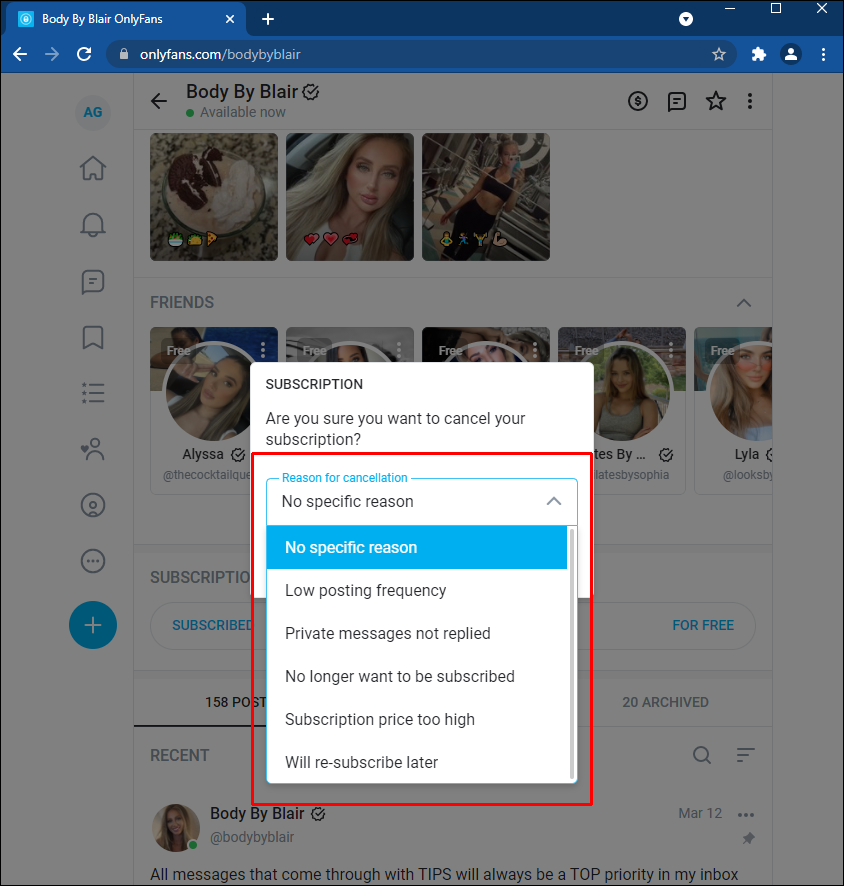
This detail matters because many subscribers cancel outright when disabling renewal would have solved the problem. Cancelling early forfeits remaining paid days; switching off auto-renew preserves them and still prevents the next debit.
Assessing Remaining Subscription Value
Once the bleeding stops, decide what the remaining subscriptions are actually worth to you. The question is not whether you enjoyed the page last month, but whether the next paid period will deliver enough value to justify its price.
Four factors determine whether a subscription merits keeping after an incident:
- Posting frequency, measured over the last 30 days rather than the first week you joined.
- Price relative to your personal average, since typical paid subscriptions sit between $4.99 and $15.
- Interaction value, meaning whether messages and requests actually receive responses.
- Unused PPV backlog, because locked content you never opened represents money already spent.
Apply a simple rule: if a subscription fails two or more of these factors, it moves to the pause list. Pages that pass three or four stay, but only at their current price point.
Renegotiating Your Monthly Allocation
Recovery is a redistribution exercise. You have a fixed monthly figure for subscriptions, and an unexpected charge has already consumed part of it.
Use this priority ranking method to decide which subscriptions to maintain, reduce, or pause:
- Rank every active subscription by value per dollar, using the assessment factors from the previous section.
- Assign your total monthly cap to the top-ranked pages first, at their full base price.
- Pause anything that falls below the cap line and note its renewal date for a later review.
- Convert one mid-ranked paid subscription to a free page where the creator offers both, since free pages charge $0 and earn through PPV and tips instead.
- Hold the remainder as a buffer for one planned PPV unlock per month, capped at $50.
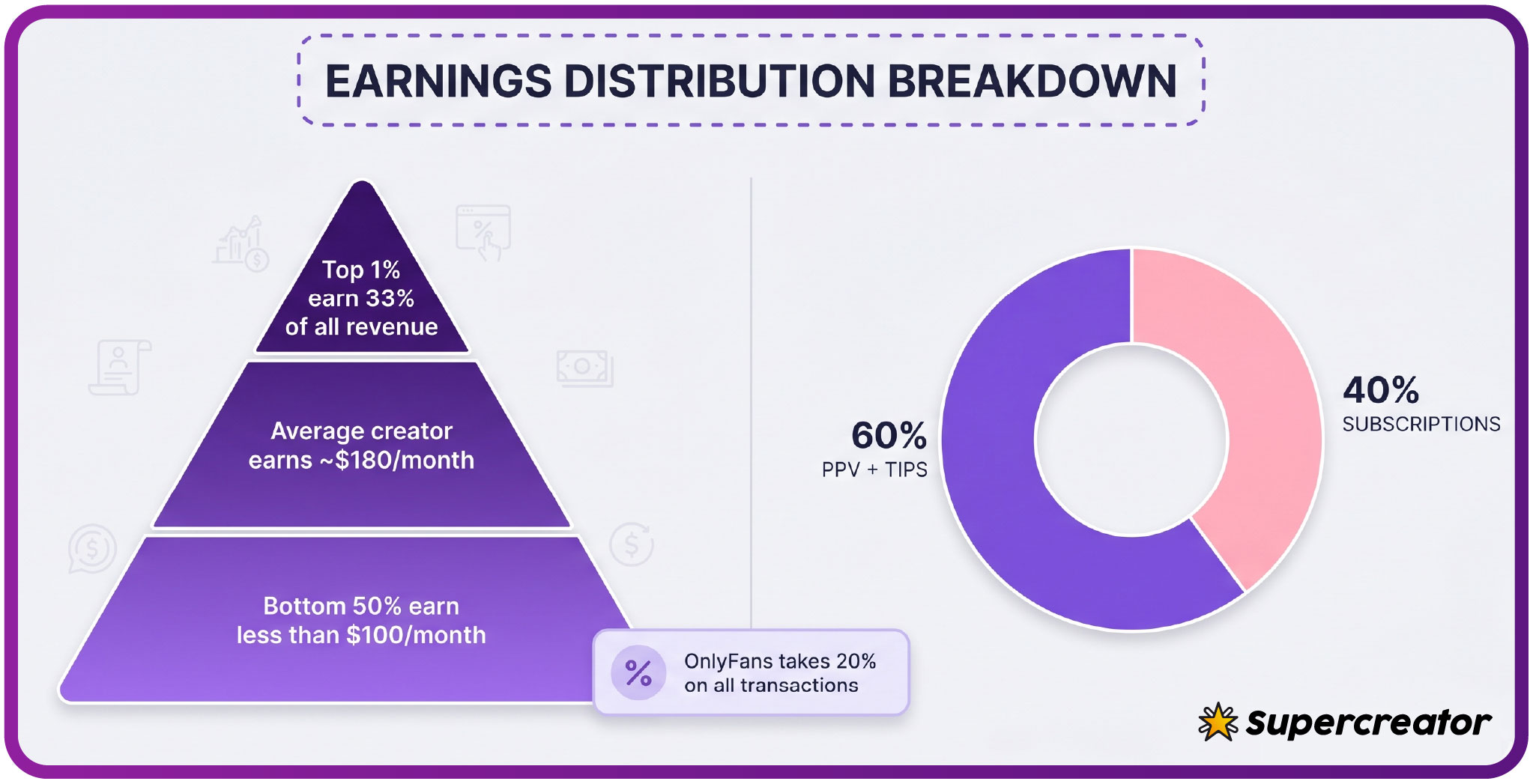
Remember the platform economics while you plan. The platform takes a 20% fee on everything, and the creator keeps 80%, which means a $10 subscription pays the creator $8. That context explains why creators price carefully and why a small reduction in your allocation has a real effect on their side too.
If you also pay for extra chat messages, note that paid chat commonly runs $3 to $5 per message, and that line item deserves its own row in the allocation rather than hiding inside the subscription total.
Communication with Creators
Most billing concerns do not require creator involvement, but a few situations benefit from a short, factual message. The key is knowing which situations those are before you type.
| Situation Type | Approach | Expected Response |
|---|---|---|
| Renewal you meant to cancel | Message politely, state the date, ask about a discretionary refund | Varies; creators are not obligated to refund completed periods |
| Price increase you did not notice | Reference the change and ask whether the old rate can apply going forward | Often a clear yes or no with updated terms |
| Duplicate PPV unlock | Provide the message thread and timestamp | Commonly resolved with account credit or a replacement unlock |
| Suspected fraudulent charge | Do not negotiate; secure the account first | Escalates to platform and card issuer channels |

Keep messages short and specific. Creators handle high message volumes, and a clear subject line with the charge date and amount gets a faster reply than a long explanation.
One warning is worth repeating: never send payment outside the platform, and never share card details in a message thread. Off-platform payment requests are a classic sign of phishing attempts, and a single lapse can turn a small billing annoyance into a genuine case of identity theft.
Long-Term Prevention Systems
The final step is structural. A one-time cleanup fixes this month; habits fix the next twelve. These six practices reduce how often surprise charges appear:
- A dedicated payment card used only for subscriptions, with a limit set at your monthly cap.
- A calendar entry three days before each renewal date you have chosen to keep.
- A monthly statement review that takes ten minutes and catches anything unfamiliar early.
- Auto-renew left off by default, switched on only for pages you actively use.
- A written monthly budget line for subscriptions, PPV, and tips as separate amounts.
- Two-step authentication enabled on the account to prevent unauthorized purchases.
Credit card protection adds a useful backstop here, since most issuers allow you to dispute charges that were not authorized. That route works better when your records are clean and your card is dedicated, which is exactly what these habits produce.
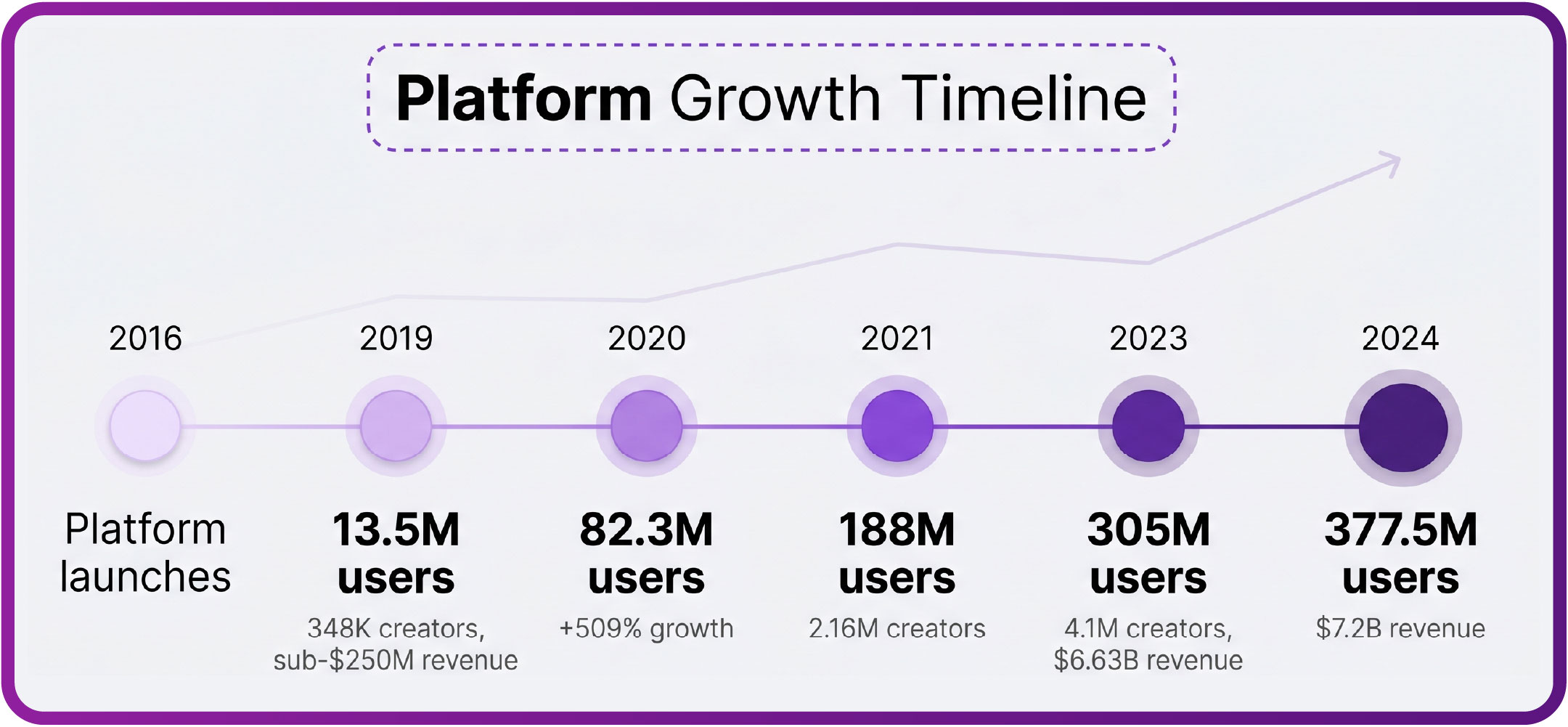
The broader context supports this discipline. The platform grew from a small operation in 2016 into a mainstream service with millions of users, and as the audience expanded, so did the volume of routine billing contact. Ranking and review sites exist partly because there is no built-in discovery feed, and comparison articles such as this roundup of the best onlyfans model quora discussions show how subscribers research pages before committing money. BestOnlyFans applies the same caution to billing: check the record before you assume the worst.
When to Request Platform Intervention
Some charges cannot be resolved between you and a creator. Escalation is appropriate when the pattern points to an error or an unauthorized transaction rather than a choice you made.
| Charge Characteristic | Self-Action First | Escalation Threshold |
|---|---|---|
| Renewal you forgot | Disable auto-renew, message the creator | Only if the renewal repeated after you disabled it |
| Charge with no matching receipt | Verify login history and payment methods | Escalate immediately if the account shows unfamiliar devices |
| Duplicate charge for one purchase | Gather timestamps and screenshots | Escalate after 48 hours with no creator reply |
| Charge after account lockout | Secure by changing the password and enabling two-step authentication, then document everything | Escalate at once, then notify the card issuer |
Platform billing inquiries typically receive an initial response within a few business days, though refund decisions can take longer. Card issuers operate on their own timelines, and a dispute filed too early can complicate a case the platform was already resolving.
Documentation is what makes escalation work. Keep screenshots of the charge, the receipt, and every message exchanged. A clean paper trail turns a disputed charge into a straightforward review, and most formal requests succeed or fail on that record alone.
FAQ
How can I tell if an unexpected charge is from auto-renewal or a purchase I forgot?
Compare the amount against your subscription list first. A renewal matches a base price you already agreed to, while a forgotten purchase usually matches a PPV unlock or tip that appears in your message history instead.
Will pausing auto-renewal affect my immediate access to content?
No. Access continues until the paid period ends, and only the next charge is blocked. You keep everything you already paid for during the remaining days.
What is the typical timeframe for OnlyFans to respond to billing inquiries?
Initial replies generally arrive within a few business days. Refund reviews take longer, and card issuer disputes follow separate schedules that can stretch to several weeks.
Can I set hard spending caps that the platform will enforce automatically?
There is no platform-wide spending cap. The practical equivalent is a dedicated card with a limit, combined with auto-renew disabled and confirmation prompts enabled for purchases.