
OnlyFans Free Pages: Hidden Pay-Per-View Costs Explained
OnlyFans free pages charge nothing to follow, but the pay-per-view messages behind them can quietly cost more than a monthly subscription. This guide breaks down exactly where the money goes on a zero-dollar page, what the $50 unlock ceiling means for your wallet, and how to set spending limits before small purchases turn into a real monthly bill. BestOnlyFans tracks these pricing patterns across the platform so subscribers can see the full picture before they spend. BestOnlyFans refreshes its rankings every month.
A free page removes the entry barrier, not the cost structure. The creator still earns through unlock fees, tips, and paid chat, and those charges sit entirely on the subscriber’s side of the ledger. Understanding that trade-off is the difference between a controlled hobby and an unplanned expense. The BestOnlyFans method stays consistent across updates.
How Free OnlyFans Pages Generate Revenue
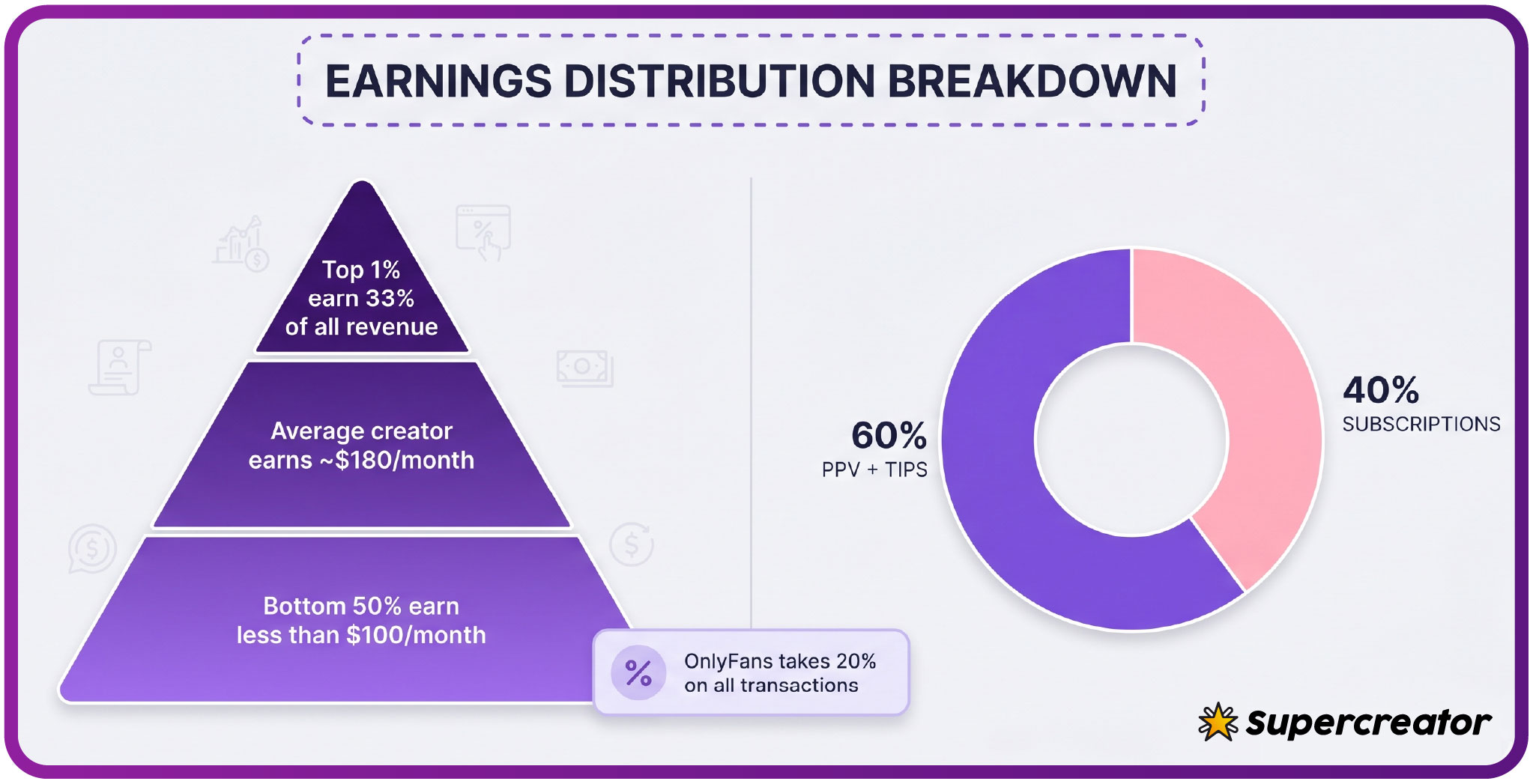
The zero-dollar subscription model works because the platform takes a 20% cut of everything a creator sells, and a free page simply shifts all earning into transactions that happen after the follow. There is no monthly fee to split, so the creator’s income depends on how often subscribers choose to unlock, tip, or message.
That design changes subscriber behaviour. Because nothing is charged at signup, the perceived cost of following is zero, and the first unlock feels like a small, isolated decision. In practice, each of those small decisions is the actual business model.
- PPV posts that sit behind a one-time unlock price
- PPV messages sent directly to a subscriber’s inbox
- Paid chat billed at a per-message rate
- Tips sent voluntarily for content or attention
- Promotional bundles that combine several unlocks at a discount
Tips can reach $100, and paid chat commonly runs $3 to $5 per message, so a single back-and-forth conversation can match a mid-range monthly subscription in a matter of minutes. None of this appears on a billing statement as a recurring charge, which is precisely why it is easy to lose track of.
Tip: Treat every PPV unlock as a purchase, not a subscription perk. If you would not buy the same item at the same price in a store, the unlock is not free just because the follow was.
PPV Message Pricing and the $50 Unlock Limit
Pay-per-view messages unlock at prices set by the creator, with a platform ceiling of $50 per item. Below that ceiling, pricing varies widely, and the range reflects how much work went into the content rather than any standard rate card.
Paid chat is priced separately and usually lands between $3 and $5 per message. That structure rewards sustained conversation, which means the total cost of an active chat session is driven by duration rather than any single charge.
- Content length, since longer clips and larger sets justify higher unlock prices
- Exclusivity, because content never posted elsewhere carries a premium
- Production cost, including equipment, editing time, and set design
- Creator experience level, as established pages price more confidently
- Fan demand patterns, where high request volume pushes prices upward
A useful benchmark is the paid subscription range itself: base prices run from $4.99 to $49.99, with most pages clustering between $5 and $10. When a single PPV unlock approaches or exceeds that typical monthly figure, the free page has stopped being the cheaper option for that month.
Common Spending Patterns on Free Pages
Individual unlocks rarely feel significant. The pattern that matters is cumulative, and it usually follows one of three shapes depending on how many free pages a subscriber follows and how often PPV messages arrive.
| Spending Scenario | Monthly Cost Range | Risk Level |
|---|---|---|
| Light engagement: one or two free follows, occasional unlocks | $10 – $30 | Low |
| Moderate engagement: several follows, regular PPV and some chat | $40 – $90 | Moderate |
| Heavy engagement: many follows, frequent unlocks, extended chat | $120 – $300+ | High |
The moderate row is where most overspending happens, because the total rarely arrives as one charge. It accumulates across a dozen separate transactions that each looked affordable at the moment of purchase.
Following many free pages multiplies the exposure. Each page sends its own PPV messages, and each message is a separate decision point, so the number of follows is a direct multiplier on how often you are asked to spend.
Budgeting Tools for Zero-Dollar Access
The absence of a subscription fee removes the natural monthly checkpoint that a recurring charge provides. Replacing that checkpoint with an explicit cap is the single most effective control available.
- Prepaid cards with a fixed balance that cannot be topped up impulsively
- A monthly PPV cap written down before the month begins
- A per-message price ceiling that triggers an automatic decline
- A follow count restriction to limit incoming PPV offers
- A weekly spending review to catch drift early
A weekly review works better than a monthly one because it shortens the feedback loop. If you check totals every seven days, an emerging pattern is visible while it is still small enough to correct.
Separating the payment method from your main card adds friction, and friction is useful here. A dedicated prepaid balance makes the spending limit physical rather than theoretical, and it prevents an accidental charge from reaching your primary account.
Warning: Never store a primary debit card on a free page if you have not set a spending cap. One unplanned chat session can clear more than a full year of paid subscriptions.
Comparing Free and Paid Page Economics
The comparison is not free versus expensive. It is predictable versus variable, and the right choice depends on how much you actually intend to unlock in a given month.
| Cost Factor | Free Page | Paid Page |
|---|---|---|
| Base monthly cost | $0 | $4.99 – $49.99 |
| Content access | Included posts plus paid unlocks | Full feed within the subscription period |
| Cost predictability | Variable, driven by PPV volume | Fixed for the billing period |
| Spending ceiling | No natural cap | Capped at the subscription price |
| Promotional pricing | Not applicable | First months can drop below $4.99 |
A paid page at $9.99 with full feed access can cost less than a free page where you unlock three $15 items in the same month. The free label describes the entry price, not the total.
Many subscribers compare offers using a curated free onlyfans link list to see which pages publish their PPV pricing openly. Pages that disclose unlock costs up front are easier to budget for than pages where every message is a surprise charge.
Paid pages also cap your exposure structurally. Once the subscription is paid, the month’s cost is fixed unless you choose to buy extras, which makes them easier to fit into a monthly budget than an open-ended PPV arrangement.
Safe Browsing Practices for Free Accounts
Free pages attract the same payment and privacy risks as any paid service, and the signup process is where most of the exposure begins. Limiting what you hand over at that stage prevents problems later.
- Use a separate email address created only for platform accounts
- Pay with a virtual card rather than your primary bank card
- Connect through a VPN on shared or public networks
- Choose a unique username that does not match other social profiles
- Enable two-factor authentication immediately after signup
Two-factor authentication is the highest-value step on that list, since account takeover is the most common route to unauthorized charges on a stored payment method.

Be careful with messages that ask you to move a conversation off the platform or to send payment directly. Those requests bypass the platform’s protections, and once a payment leaves the system, recovering it is difficult.
When Free Pages Convert to Paid Subscriptions
Creators switch a page from free to paid when the PPV model is not producing enough revenue, and the change is usually signalled in advance through subtle shifts in posting behaviour.
- Free content volume drops while paid unlocks increase
- PPV messages arrive more frequently than before
- Promotional language shifts toward subscription framing
- Hints about upcoming changes appear on linked social accounts
- Ranking sites begin tracking a new base price for the page
When the switch happens, the mechanics are clear: a new base price is set within the $4.99 to $49.99 range, and existing access lasts until the paid period you already have ends. Promotional first months can be priced below $4.99, but the base rate may not drop beneath that floor.
One detail catches subscribers off guard. If a creator raises the price on a page you already pay for, auto-renew stops automatically rather than charging the higher amount, and your access continues until the current paid period expires. That gives you a clear window to decide whether the new price is worth it.
A card verification hold of $0.10 may appear when you add a payment method to any page, free or paid. It is refunded within days and is not a charge for content.
FAQ
Can I follow a free OnlyFans page without entering payment information?
Yes. Following a page priced at $0 does not require a card, and you can browse the included feed without any payment method on file. A card is only needed when you choose to unlock a PPV item, send a tip, or start a paid chat.
Why does my free OnlyFans page suddenly ask for a subscription fee?
The creator has converted the page from free to paid. Base prices must sit within the $4.99 to $49.99 range, though a promotional first month can be priced below $4.99. Existing access continues until your current paid period ends if you were already subscribed at a lower rate.
How can I track what I spend on PPV messages each month?
Check your transaction history inside the platform and reconcile it weekly against a written cap. Using a prepaid or virtual card with a fixed balance gives you a second, independent record of every unlock, tip, and chat charge for the month.
What happens to my access if a free page I follow becomes paid?
You keep access until the paid period you already hold runs out. If the creator later raises the price, auto-renew stops rather than charging the new amount, and you decide whether to resubscribe at the higher rate before your access lapses.