
Aviator vs Slot Machines: Different Games
Aviator and slot machines use different game structures. Aviator is a crash game by Spribe, while a slot uses spins, reels, and a predetermined game result for each spin.
The practical differences appear quickly. Aviator has no bonus round, lets the player choose when to cash out, and moves through rounds in seconds. A slot machine normally asks the player to start another spin after the previous result.
Aviator Is Not A Slot
Spribe launched Aviator in early 2019. The game uses an increasing curve that can crash at any time.
Aviator has no bonus round. It is an instant game, not a slot, and its central action is the choice between waiting for a higher multiplier and exiting before the crash.
A slot machine normally presents a spin as the main event. The player selects a stake, starts the reels, and waits for the symbols to stop. The result comes from that spin. Aviator presents a live multiplier instead. The multiplier rises from the start of the round, but the round can end at any point.
- Aviator uses a rising multiplier and a crash point.
- A slot machine uses a spin and a symbol result.
- Aviator has no bonus round.
- A slot machine may use bonus features, but those features depend on the individual game.
The distinction matters because the player makes a timing decision in Aviator. A player can cash out at 1.50x, 2.00x, or another available point before the crash. A slot player does not normally stop an active spin to lock in a multiplier.
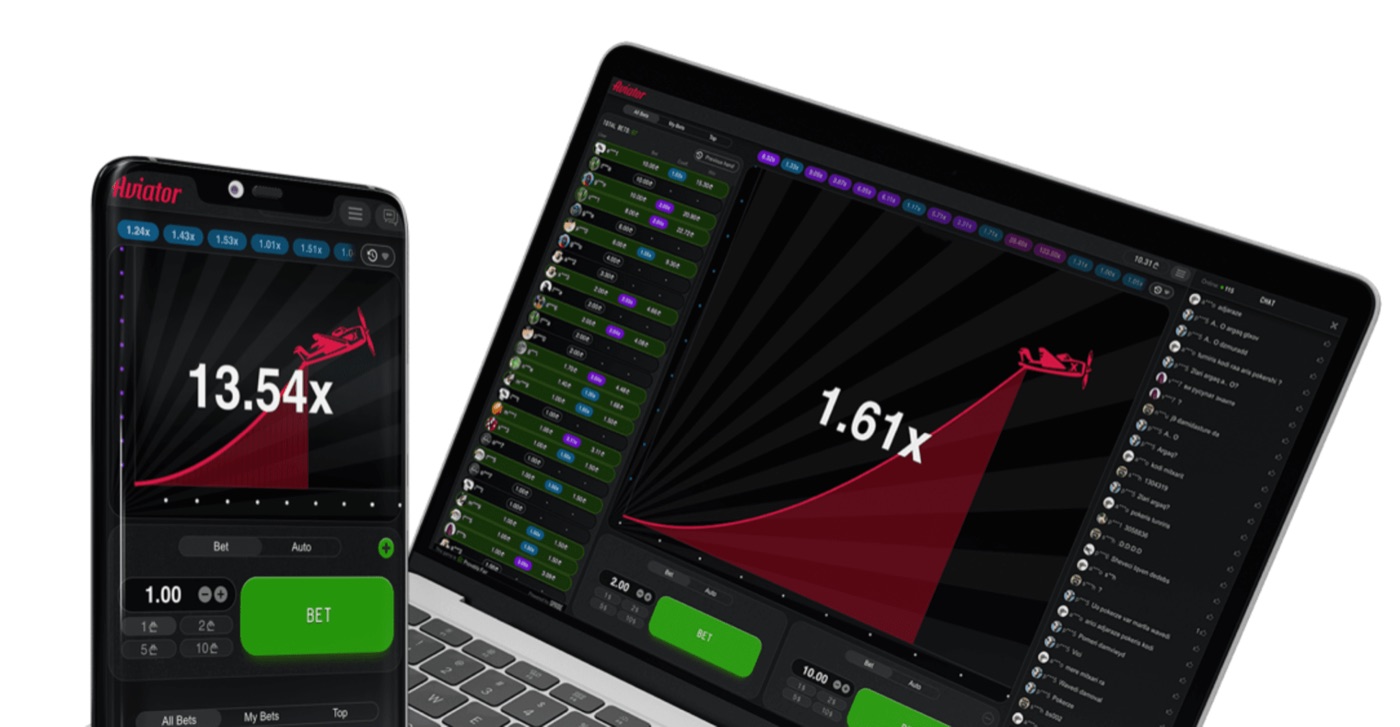
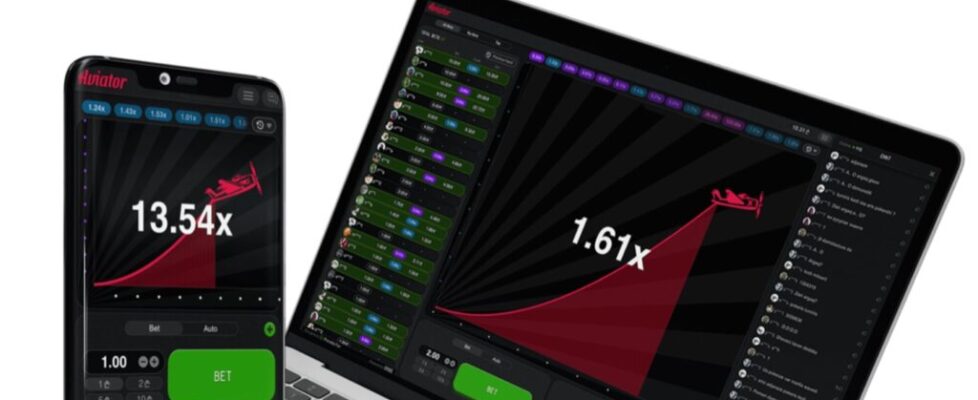
Aviator displays live multipliers on a phone and a laptop.
Aviator also shows the current round to other players. The interface can include live bets, a round history, and in-game chat. These features support the social multiplayer format described by Spribe. They do not turn the game into a slot.
Cash-Out Changes The Choice
Aviator gives each round two bet panels. Each panel can use a separate cash-out decision.
The game includes an Auto Cash-Out setting with a preset multiplier. Players can also use Auto Bet or Auto Play for 10 to 100 rounds.
A manual cash-out creates a direct decision. Suppose a player stakes $1 and exits at 1.50x. The return is $1.50 before any applicable operator rules. If the player waits for 3.00x and the crash arrives at 2.40x, that bet loses because the cash-out did not reach the server before the crash.
The game can show two bets in one round. This lets a player apply two separate exit points:
- Bet one can use a 1.50x cash-out.
- Bet two can remain active for a higher target.
- Each bet has its own stake and result.
- The two-bet setup changes variance, not the house edge.
A slot spin does not usually offer this type of active exit. The player may stop playing after a spin, but the spin itself has already produced its result. Aviator keeps the cash-out choice inside the round.
Automatic tools reduce the need to click during a fast round. Auto Cash-Out exits at the selected multiplier when the round reaches it. Auto Bet and Auto Play place bets across the selected number of rounds, with stop-on-win and stop-on-loss options.
These tools do not predict the crash point. They only apply instructions already chosen by the player. Rounds remain independent, so a previous low multiplier does not make a higher multiplier due.
Cash-out timing also has a technical limit. The request must reach the server before the crash. A slow device or connection can cause a cash-out time-out, but an automatic setting cannot change a crash point that was fixed before take-off.
Players should set a spending limit before using either game. A preset exit can control a decision, but it cannot remove the risk of losing a stake.
RTP Shows The Difference
Aviator has a published RTP of 97%. That figure gives the game a 3% house edge.
Aviator reaches multiplier m with a probability of 0.97 divided by m. The expected value remains -3% of the stake at every cash-out target.
RTP is the clearest numerical comparison between Aviator and a slot, but the number must be read correctly. RTP describes long-run expected return. It does not promise that a player will receive 97 cents from every dollar, every round, or every session.
| Multiplier target | Probability the round reaches it | Example return on a $1 stake |
|---|---|---|
| 1.20x | 80.8% | $1.20 |
| 1.50x | 64.7% | $1.50 |
| 2.00x | 48.5% | $2.00 |
| 3.00x | 32.3% | $3.00 |
| 5.00x | 19.4% | $5.00 |
| 10.00x | 9.7% | $10.00 |
The return column shows the stake multiplied by the target. It does not show profit. A $1 stake cashed out at 1.50x returns $1.50, including the original stake. The mathematical expectation is still negative by 3 cents for each $1 stake over a sufficiently large number of rounds.
- A 1.20x target succeeds in about 80.8% of rounds.
- A 2.00x target succeeds in about 48.5% of rounds.
- A 5.00x target succeeds in about 19.4% of rounds.
- A 10.00x target succeeds in about 9.7% of rounds.
- A round crashes instantly at 1.00x in about 3% of rounds, or roughly one in 33.
Lower targets tend to occur more often, while higher targets occur less often. Choosing a lower target does not create a positive edge. It changes the pattern of wins and losses and the size of individual returns.
Slots also use RTP figures, but the value depends on the individual slot. A comparison must use the published RTP for the specific slot, not a general slot average. Where an operator sets or displays a different value, the relevant figure depends on the operator.
For comparison, JetX is listed at 96.2% to 98.9% RTP, Spaceman at 95.5%, Aviatrix at 97%, and Aviamasters at 97%. These figures describe other crash games and do not change Aviator’s 97% RTP.
Strategy cannot remove the 3% edge. A 1.50x target, a 10.00x target, or a split bet changes variance, but each approach retains the same expected value.
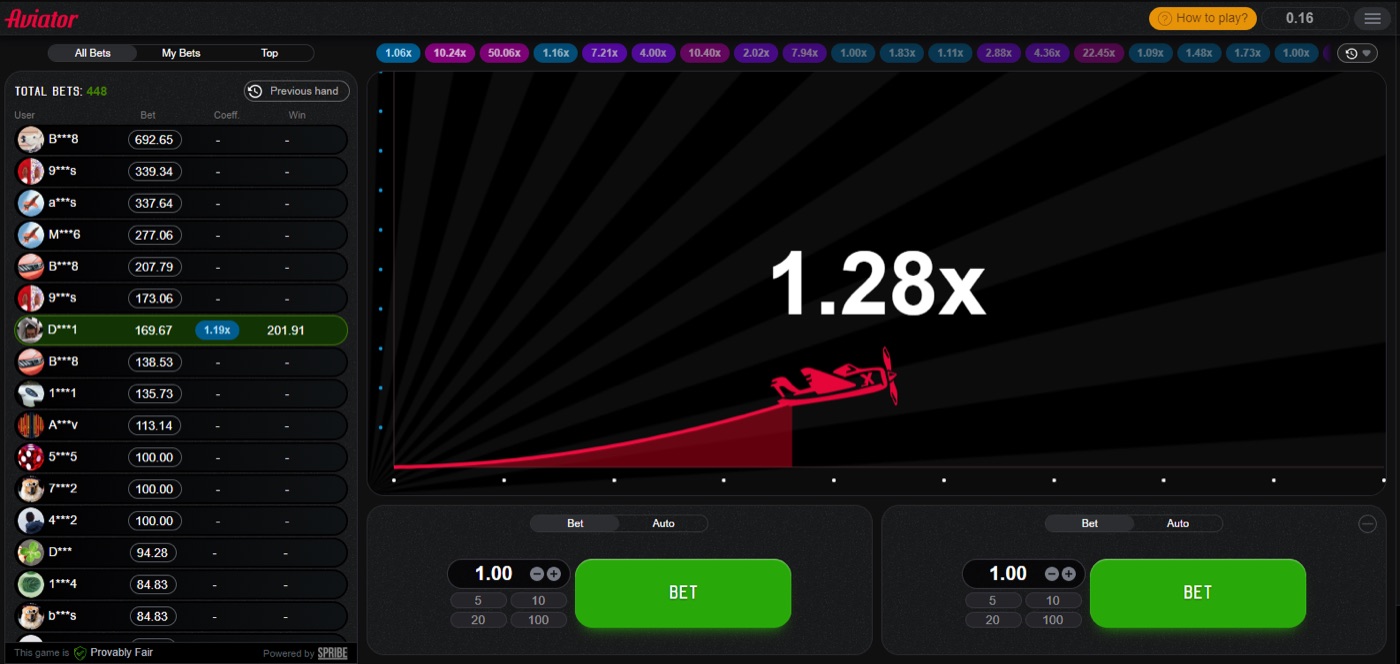
The Aviator round shows the plane and the live multiplier before the crash.
Pacing Drives Session Shape
Aviator rounds last about 8 to 30 seconds. The game runs at about 60 to 90 rounds per hour.
A few seconds separate rounds. A slot spin can also be quick, but its pace follows the player’s spin input rather than a shared crash round.
This creates two different session rhythms. Aviator asks for repeated decisions in a short window. A slot asks the player to review one spin result before starting another. Neither structure makes a result more predictable.
Concrete timing helps explain the difference. At 60 rounds per hour, a player could see one round about every minute on average. At 90 rounds per hour, the game presents a much faster sequence. A single round may still end after eight seconds or continue for longer within the stated range.
- Choose a stake before take-off.
- Watch the multiplier rise.
- Cash out manually or let Auto Cash-Out act.
- Wait for the next round.
A slot follows a different sequence:
- Choose a stake for the spin.
- Start the reels.
- Wait for the symbols to stop.
- Review the result and decide whether to spin again.
Aviator’s faster cycle can increase the number of decisions in a session. That matters because more rounds can mean more total stake exposure. A lower stake per round does not automatically make a long session low risk.
The game works on desktop, tablet, and mobile browsers. It was built for low bandwidth and budget devices. A slot’s device and connection requirements depend on the individual game and operator platform.
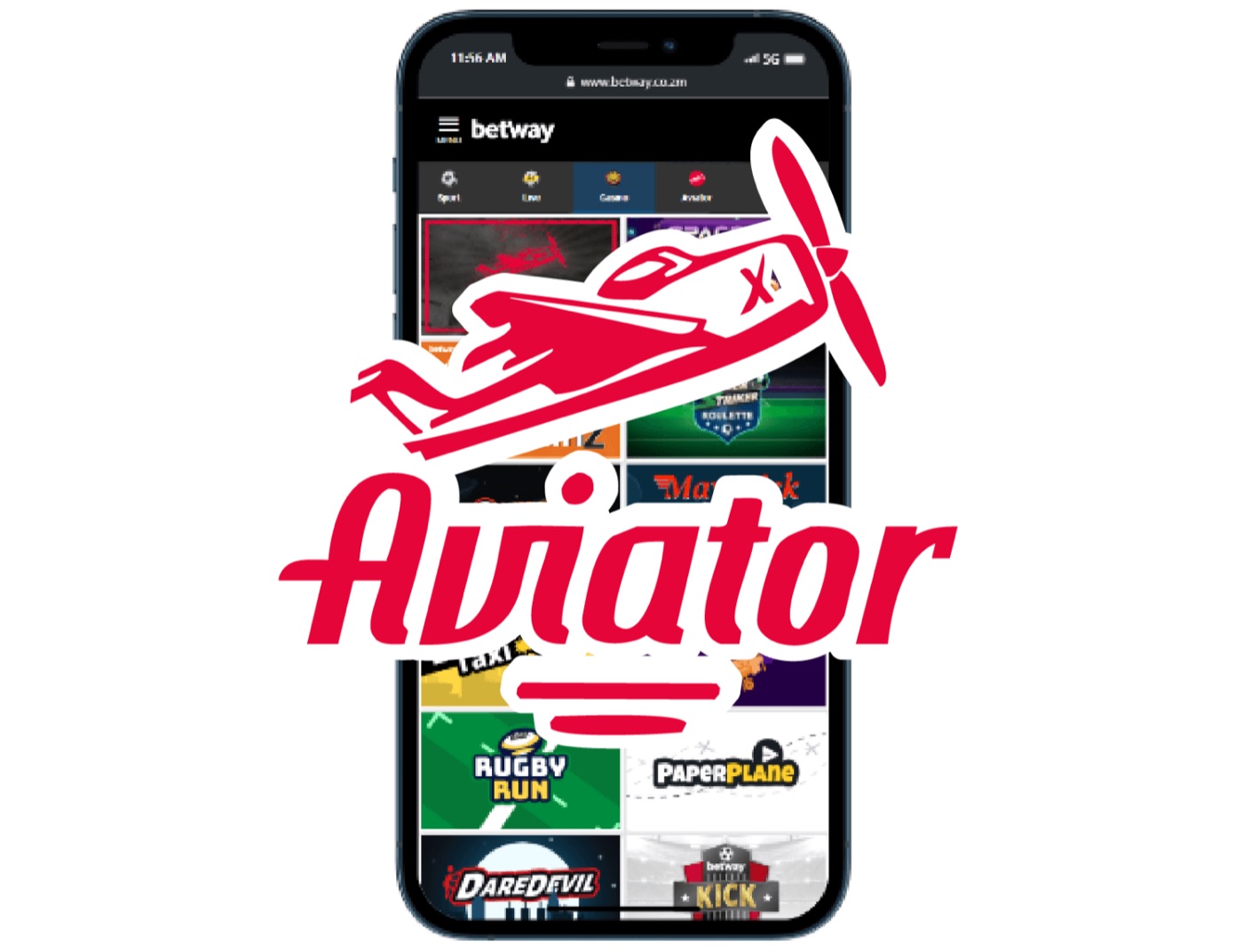
Aviator appears inside an operator’s mobile casino lobby.
Aviator runs inside a licensed operator’s website or app. Spribe does not provide a standalone official Aviator app. An operator may offer the game in a casino or instant-games menu, while the exact placement depends on the operator.
The game also has a demo mode that needs no registration. Demo play can show the layout and timing without using a real stake. It does not change the 97% RTP or make real-money results predictable.
Fairness And Player Information
Aviator publishes a SHA-256 hash before each round. The crash point is fixed before take-off.
The server seed and player client seeds combine to determine the result. Inputs are revealed after the round and can be checked with the verification tool inside the game.
This process gives players a way to check the result after it occurs. Neither the operator nor Spribe can change a result after the round starts. The hash does not predict the next multiplier. It confirms the committed result when the required inputs become available.
- The server publishes a hash before the round.
- Player client seeds are combined with the server seed.
- The crash point is fixed before take-off.
- The inputs become available for checking after the round.
A slot uses a different visible structure. The player usually sees reels, symbols, paylines, or a stated feature set. Aviator instead shows a multiplier, a plane, a round history, and a crash event. The relevant fairness information depends on the game’s own system.
Claims about patterns do not change the probability table. Graph analysis, a strategy chart, a best time to play, or a prediction bot cannot alter an independent round. Public mathematics resold by signal bots does not reveal a future crash point.
Players sometimes report different results per account or cash-out time-outs. The provably fair system addresses the result question through verification. A time-out can occur when a cash-out request reaches the server after the crash, including because of latency or a slow device.
The maximum multiplier is not published by Spribe. Guides quote different figures. Win caps per round are set by each operator, so a displayed multiplier and the amount payable are separate questions.
Comparing The Player Experience
Aviator offers a live bets panel with All Bets, My Bets, and Top views. The Top view can show daily, monthly, and all-time wins.
The game also includes Bet and Auto tabs, round history, typical quick-stake buttons, and an in-game chat. These named controls make the comparison with a simple slot spin practical.
The interface puts information beside the active round. Players can see previous multipliers and current bets while deciding whether to exit. A slot interface normally puts more attention on the reels and the result of the current spin.
- Round history records previous multipliers.
- Live Bets separates all bets from the player’s bets.
- Top displays selected winning records.
- Chat can carry operator announcements and player messages.
- The Provably Fair badge leads to the game’s checking process.
Some operator promotions can appear in chat. Rain Promo drops free bets into the chat, and the first players to tap “claim” receive them. Operators can also grant free bets individually, in batches, or by API. These are operator features, not a bonus round inside Aviator.
For a crash game, aviator game download for pc windows 10 is a search phrase that may appear when players look for a desktop way to place a stake or set a cash-out. Aviator itself runs through an operator website or app, not a standalone Spribe application.
A slot may offer more symbol-based presentation, while Aviator puts the multiplier and cash-out decision first. The choice is therefore about game mechanics, not simply screen design.
Aviator FAQ
Aviator uses a 97% RTP and rounds of about 8 to 30 seconds. Slot RTP and pacing depend on the individual slot and operator.
Aviator has no bonus round, while some slots use additional features. The questions below focus on the specific differences between the two game types.
Is Aviator a slot machine?
No. Aviator is a crash game and instant game by Spribe. It uses a rising multiplier that can crash at any time. A slot machine uses spins and symbol results. Aviator has no bonus round.
Can players control the Aviator exit?
Yes. A player can cash out manually at a chosen point, or use Auto Cash-Out at a preset multiplier. The cash-out request must reach the server before the crash. Two bet panels can use separate cash-out decisions.
What is Aviator’s RTP?
Aviator’s RTP is 97%, with a 3% house edge. The expected value is -3% of the stake at every cash-out target. A target changes variance and return size, not the mathematical edge.
Does a higher multiplier become more likely?
No. The probability falls as the target rises. The round reaches 2.00x in 48.5% of rounds, 5.00x in 19.4%, and 10.00x in 9.7%. Previous rounds do not change the next round’s probability.
Can players play Aviator for free?
Yes. Aviator has a demo mode that needs no registration. Demo mode can show the controls and round timing. It does not produce a real-money return or change the game’s RTP.
Is there an official Aviator app from Spribe?
No standalone official Aviator app comes from Spribe. The game runs inside an operator’s website or app. Apps using names such as Aviator or Aviator Predictor are third-party products and do not predict the crash point.